


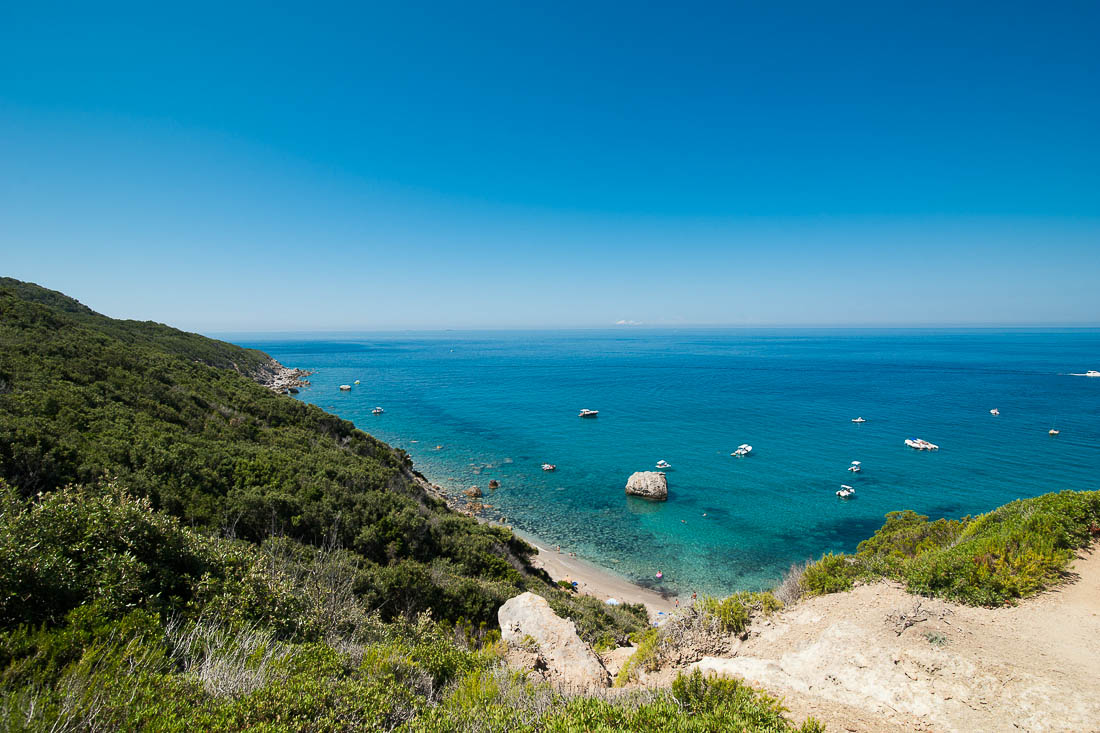
12 Jan Giglio Island
The goats island
The island has been inhabited since the Iron Age. Giglio owes it’s name to the presence in past times of numerous goats (αίγες in greek). The name Giglio derives from the Latin version of the Greek word for “goat”, Αιγύλιον (Aigylion): Goat Island, then Igilium by the Roman and transformed in Gilio in the Middle Age.
The second island of the archipelago
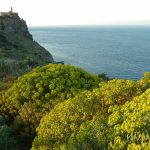
Giglio is the second biggest island of Tuscan Archipelago with its about 21 square kilometers. Mainly mountainous, it consists almost entirely of granite, culminating in the Poggio della Pagana (496 m). The beaches located towards in the east coast are equipped with facilities. The coast is made up of rocks, smooth cliffs and several bays, especially on the western side.
Giglio Island villages
Three principal settlements are located on the main island: Giglio Porto, Giglio Campese and Giglio Castello. Giglio Porto is a small picturesque harbor, Giglio Campese is the most popular tourist spot thanks to its wide beach and Giglio Castello located upon a hill between the two other localities and characterized by the majestic walls of a fortress.
A natural paradise
The Giglio Island is covered by Mediterranean vegetation and hosts many different types of animal species; the Mediterranean scrub includes species like mastic, heather, myrtle and is populated by rare and protected animals such the herring gull and the peregrine falcon. Characteristic of the landscape are the terraced fields built on the steep cliffs which allow the production of the local wine “Ansonico“.
How to get to Giglio Island
A visit on the Giglio Island is it possible with a mini cruise departing from the nearby port of Castiglione della Pescaia. For further details please contact the tourist information office – IAT of Castiglione della Pescaia- +39 0564 933678.Giglio Island is accessible by a daily boat from Porto Santo Stefano. Travel time is approximately 1 hour.
May also be interested ...
 In vacanza a Montemassi Piccola frazione del comune di Roccastrada famoso per il suo Castello e per gli splendidi panorami che potrete ammirare visitando questo piccolo borgo...
 Boat rental for Elba island The largest of the islands of the Tuscan archipelago, one of the seven wonders of the archipelago, choose to discover it with our boat and you'll be e...
 Circoli velici della Maremma
DI SEGUITO TROVERETE L’ELENCO AGGIORNATO DEI CIRCOLI VELICI IN MAREMMA:
...
Circoli velici della Maremma
DI SEGUITO TROVERETE L’ELENCO AGGIORNATO DEI CIRCOLI VELICI IN MAREMMA:
... Teatro delle Rocce Il Teatro delle Rocce, inaugurato nel 2003, è oggi uno dei simboli del Parco Nazionale delle Colline Metallifere, entrato a far parte delle rete eu...
 Buchen Sie ein Mietboot nach Capraia Mieten Sie ein fantastisches Tornado Eleven Boot, um den toskanischen Archipel zu entdecken. Der Abfahrt erfolgt vom Hafen von Castiglione della Pesca...
 Triathlon Sprint e Olimpico a Marina di Grosseto La Società SBR3 Triathlon, impegnata nel settore del Triathlon con i propri atleti che gareggiano in ambito nazionale ed internazionale ed il Comune ...
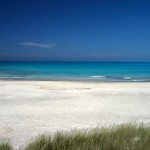 Capalbio beaches The coast of Capalbio stretches over 12 kilometers and is characterized by long sandy beaches fading from black to white situated in the south of the...
 I luoghi del tempo: la Maremma per la cultura Ad aprire l’estate in Maremma torna, come ormai da tre anni a questa parte, “I luoghi del tempo – suoni, storie e sapori in Maremma”, la rasse...